

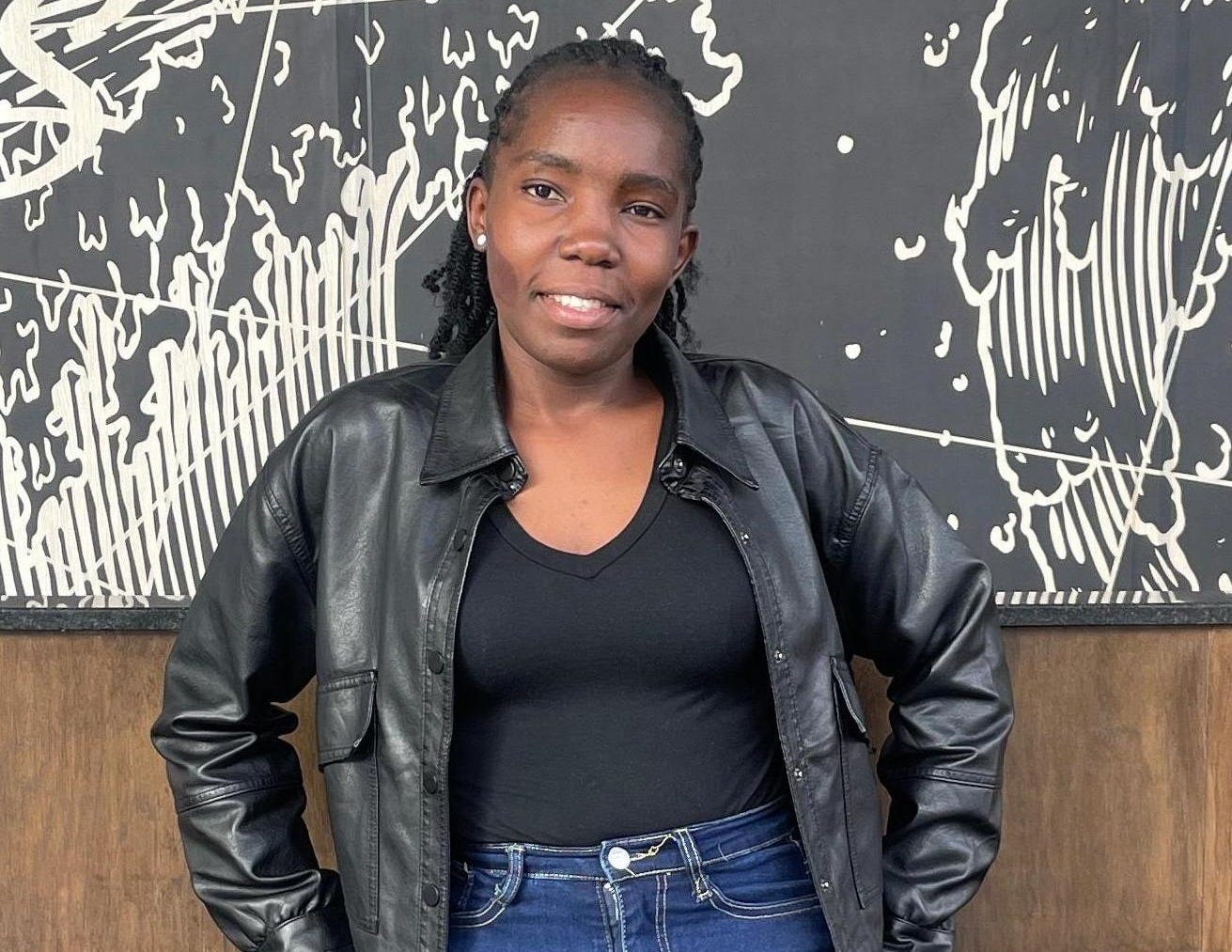
The Foundations
Interviewer: To start off, can you tell us more about who you are and what you do?
Amanda: I’m a fourth-year Mathematics and Computer Science student at JKUAT. Alongside my university studies, I’ve been intentional about building my technical skills through programs like ALX, where I completed courses in Introduction to Software Engineering and ProDev Frontend Development. I’m also a proud KamiLimu alumna, an eight-month structured mentorship program that complements classroom learning for Kenyan university students pursuing careers in tech, where I specialized in Cloud Engineering. Most recently, I graduated from the AWS re/Start program and successfully earned my AWS Certified Cloud Practitioner certification. These experiences have been instrumental in shaping my growing interest in cloud computing and the broader world of software engineering.
Interviewer: What inspired you to pursue a career in tech in the first place?
Amanda: My interest in tech started way back in high school because I really enjoyed mathematics, logical thinking, and problem-solving. I was always drawn to the structure of math, how a problem could have multiple paths to a solution, much like debugging code today. When it came time to choose a course, I decided on Mathematics and Computer Science because it combined both interests. I’m particularly drawn to the computer science side because of how mathematical concepts are applied to solve real-world problems. What motivates me most is being able to build solutions that positively impact people in my community.
Interviewer: Is there anything that excites you about a tech career, and what scares you?
Amanda: The impact! What excites me most about a tech career is the impact. Technology allows you to build solutions that can help people immediately or continue benefiting them over time. For example, tools like Git have become fundamental to how developers collaborate today. At the same time, the rapid evolution of technology, especially with the rise of AI, can feel intimidating. Sometimes it triggers imposter syndrome when you see people building applications quickly with AI tools without having studied the fundamentals. However, I see that as motivation. My years of studying computer science have given me a deeper understanding of how systems work. At the end of the day, great software engineers are shaped by the problems they solve and the bugs they debug, not just the tools they use.
Navigating the Tech Landscape
Interviewer: With AI in the picture, how has your vision for your career changed?
Amanda: With the rise of AI, it has become possible to build products much faster, often moving from idea to execution in a very short time. As the pace of innovation increases, I’ve become more interested in the systems that support these applications behind the scenes. This led me to start transitioning toward Cloud Engineering to complement my background in software engineering. In Kenya, Cloud Engineering is a growing field, which makes it an exciting area to explore. I still enjoy building systems and writing code, but expanding into cloud engineering allows me to understand how applications are deployed, scaled, and maintained in real-world environments.
Interviewer: For someone just starting their journey in software engineering, what advice would you give?
Amanda: Start with the foundation. In my case, I began with HTML, CSS, and JavaScript before moving on to frameworks. It’s important to understand the core concepts before diving into more advanced tools and frameworks. It’s also important to avoid “shiny object syndrome”, constantly jumping from one new tool or framework to another. Instead, focus on mastering one language and its ecosystem first. Once you’ve built a solid foundation, learning and adapting to new technologies becomes much easier.
Community and Representation
Interviewer: What role do you see women playing in shaping the future of tech in Africa?
Amanda: Women are contributing at every level, leading teams, building products, mentoring others, and participating in communities that drive innovation. Being part of communities like Tech Sisters Kenya has shown me how women can amplify their impact, not by competing with men, but by ensuring that everyone benefits from diverse ideas and experiences. These spaces encourage learning, collaboration, and mentorship, helping more young women see that they can fully participate and thrive in the tech ecosystem.
Interviewer: Has any specific person inspired your progress or helped shape your vision?
Amanda: One person who has truly inspired me is Dr. Chao Mbogho, founder of the KamiLimu Mentorship Program. She also studied Mathematics and Computer Science and went on to earn her Master’s at Oxford and a PhD in South Africa. Her journey shows that these milestones are possible and motivates me to keep learning and growing. Under her mentorship, I’ve learned what it really means to be guided and supported. In the eight months I spent under her guidance, I learned to give and receive constructive feedback, approach problems creatively with a human-centered eye, and carry the spirit of play and community into my personal and professional journey. Dr. Chao has dedicated nearly a decade to mentoring tech students from universities across Kenya, helping shape the next generation of innovators.
Interviewer: What is the personal value you bring to your tech journey that makes it your own?
Amanda: The personal value I bring to my tech journey is devotion, the deep sense of duty that makes me show up, learn, and contribute, even when it costs me my comfort. It drives me to fully engage with every challenge, to put in the consistent effort required to grow, and to stay focused on my goals.
The “How” of the Journey
Interviewer: How do you see technology empowering people and communities in your country?
Amanda: Technology empowers people and communities in many ways, and hackathons are a perfect example where innovators come together to solve real-world problems within a short time frame. Hackathons give young developers opportunities to collaborate, learn new skills, and sometimes even launch projects that grow into startups or freelancing opportunities. They also expose participants to global collaboration and new perspectives.
Interviewer: What is something you’d really like to talk about that people rarely ask you?
Amanda: People rarely ask about the “how”, the steps I took to get here. I’ve been privileged to have mentors in my first, second, and third years of university. Joining communities gave me a shortcut. I also write down my goals and keep track of my progress. It’s easy to focus on how much is left to do, but I like to look back and see how much I’ve already achieved. It’s about the constant effort of waking up every day and writing code.
Interviewer: How has the outlook on women in tech changed since you started your studies?
Amanda: There has definitely been a positive shift in how women are represented in tech since I started my studies. When I began, there were fewer communities dedicated to supporting women in tech, but now there are many more opportunities.
Interviewer: Why is it important for these women-focused tech communities to exist?
Amanda: Women-focused tech communities are important because they create safe and empowering spaces for girls and women to grow. Many young girls grow up hearing that subjects like mathematics and science are meant for men, which can discourage them from pursuing those paths. These communities challenge those narratives and help women realize that they belong in these spaces. They also provide mentorship, accountability partners, and role models who understand the unique challenges women may face in tech. In Tech Sisters Kenya, we often describe ourselves as “loud, unstoppable, and bold,” and that spirit helps encourage more women to step confidently into the field.
Final Words for Learners
Interviewer: Any final thoughts for those on their tech journey in 2025?
Amanda: My advice for anyone starting or continuing their tech journey in 2025 is simple. First, recognize that AI is here to stay. Instead of fearing it, learn how to use it effectively as part of your workflow. Second, don’t build your career in isolation. Join tech communities, attend networking events, and participate in hackathons. Engaging with other builders exposes you to new ideas and opportunities, and you might even meet your future collaborator or co-founder at one of those events
Amanda’s journey reminds us that while the tools of the trade—like AI and Cloud—are evolving, the core of a successful engineering career remains resilience, mentorship, and community engagement.
To stay in touch with Amanda, kindly connect with her on LinkedIn, Instagram, X or via email.